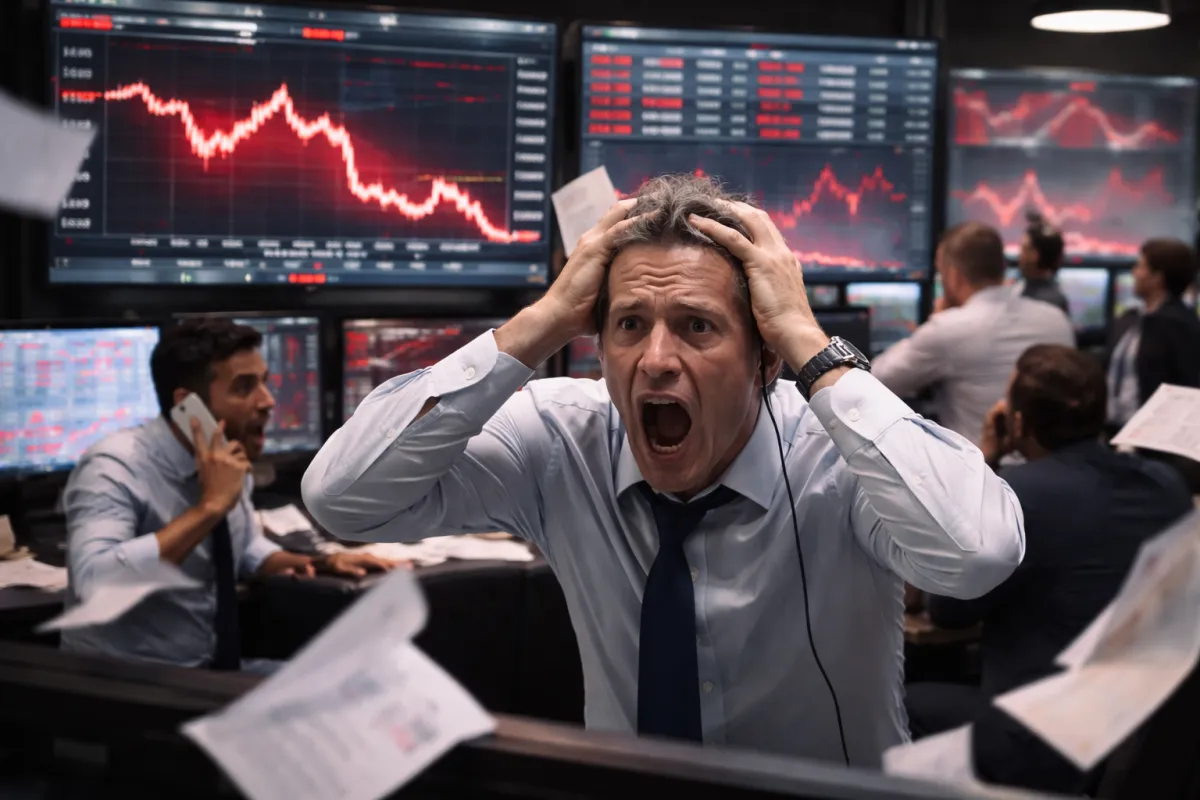
Volatility Doesn't Reveal Weakness in Markets. It Reveals Weakness in Leadership.
The market is unstable. Policy is unpredictable. The headlines are loud. And too many leaders are making decisions based on noise instead of signal.
But step back for a moment.
Because if you study enough cycles, one truth becomes clear: the environment is never the real problem. The response to the environment is.
Markets have always moved in cycles. Booms create confidence. Downturns expose discipline. And volatility? Volatility is the ultimate stress test. It reveals whether a leader actually has a strategy—or was simply benefiting from momentum.
Strategy vs. Mood
The operators who panic-pivot when conditions shift didn’t have a strategy—they had a mood.
And a mood is not a business plan.
When things get uncertain, it’s easy to confuse activity with effectiveness. Changing direction, launching new initiatives, reacting quickly—it can all feel like strong leadership in the moment. But from the outside, it often signals something else entirely:
Uncertainty.
Inconsistency.
Instability.
Your team feels it. Your investors notice it. Your clients respond to it.
People don’t expect perfection—but they do expect clarity and conviction.
The best leaders don’t ignore changing conditions. They adapt. But they adapt within a framework. They make tactical adjustments without abandoning strategic direction. They stay anchored when everything around them feels like it’s shifting.
That’s the difference between leadership and reaction.
Leading Through Uncertainty
Volatile markets don’t require perfect decisions. They require disciplined leadership.
And discipline shows up in a few key ways:
Clear communication.
When uncertainty rises, silence creates anxiety. Teams don’t need constant reassurance—they need context. What’s happening, what it means, and what matters now.
Focused priorities.
In chaotic environments, everything can feel urgent. Strong leaders simplify. They identify what truly moves the business forward and protect that focus relentlessly.
Cultural stability.
External chaos should not dictate internal behavior. When markets are unstable, culture becomes an anchor. The way decisions are made, how people treat each other, and what standards are upheld—those should not fluctuate with headlines.
Long-term thinking.
Short-term pressure can push leaders into short-term decisions. But the cost of abandoning long-term thinking is almost always higher than the temporary relief it provides.
Great leaders understand that not every opportunity is worth pursuing—especially in uncertain times. They don’t chase everything. They double down on what matters.
Where Reputation Is Built
It’s easy to look competent in a strong market.
Growth can mask inefficiencies. Momentum can cover poor decisions. When conditions are favorable, speed often gets rewarded more than discipline.
But volatility changes the rules.
It exposes overextension.
It highlights weak foundations.
It reveals where shortcuts were taken.
And at the same time, it shines a light on the leaders who built something more durable.
Because when conditions get difficult, people start paying closer attention.
Your team watches how you make decisions under pressure.
Your investors evaluate how you handle uncertainty.
Your clients decide whether they trust you enough to stay.
This is where reputation is built.
Not in the easy quarters.
Not during rapid growth.
But in the moments where holding the line is harder than changing direction.
The leaders who remain steady during volatility build something incredibly valuable: trust that compounds over time.
The Principles That Don’t Change
No matter how much the external environment shifts, some fundamentals remain constant.
Character is still your most bankable asset.
In difficult moments, decisions aren’t driven by intelligence alone. They’re driven by values. Character determines what you protect, what you prioritize, and what you refuse to compromise.
Trust is still the highest-returning investment you can make.
It reduces friction. It accelerates decision-making. It creates resilience within teams and loyalty among clients. And once built, it carries forward into every future cycle.
The long game still beats the reactive one.
Short-term reactions might create the illusion of progress. Long-term discipline is what actually builds something sustainable.
These principles aren’t new. But they become far more visible when conditions are tested.
The Real Question
The market will stabilize. It always does.
But not every business—and not every leader—comes out of volatility stronger.
Because while markets recover, reputations are harder to rebuild.
So the real question isn’t whether conditions are difficult.
The question is: how are you showing up as a leader while they are?
Are you reacting to every shift?
Or reinforcing a strategy that was built to withstand them?
Are you creating clarity—or contributing to confusion?
Are you protecting trust—or slowly eroding it?
Volatility doesn’t define your business.
Your response does.
Read more
