The Commercial Real Estate Contrarian View of 2026: Why the Assets Everyone Wrote Off Are Showing the Strongest Projected Returns
The best opportunities in commercial real estate right now are the exact assets everyone spent the last three years mocking. Office. Retail.
The consensus decided they were dead. The narrative hardened. Capital ran toward multifamily and industrial with the kind of conviction that usually signals the top of a cycle, not the bottom.
I've watched this pattern play out multiple times across decades of real estate investing. The crowd overreacts. The narrative overshoots. Capital concentrates. And eventually the gap between what the market is saying and what the fundamentals actually show gets wide enough that the opportunity becomes unmistakable — but only to the people who were paying attention before it became obvious.
That gap is forming right now. And the investors who understand it — particularly those with access to the private credit structures that make these deals executable — are in an exceptionally interesting position.
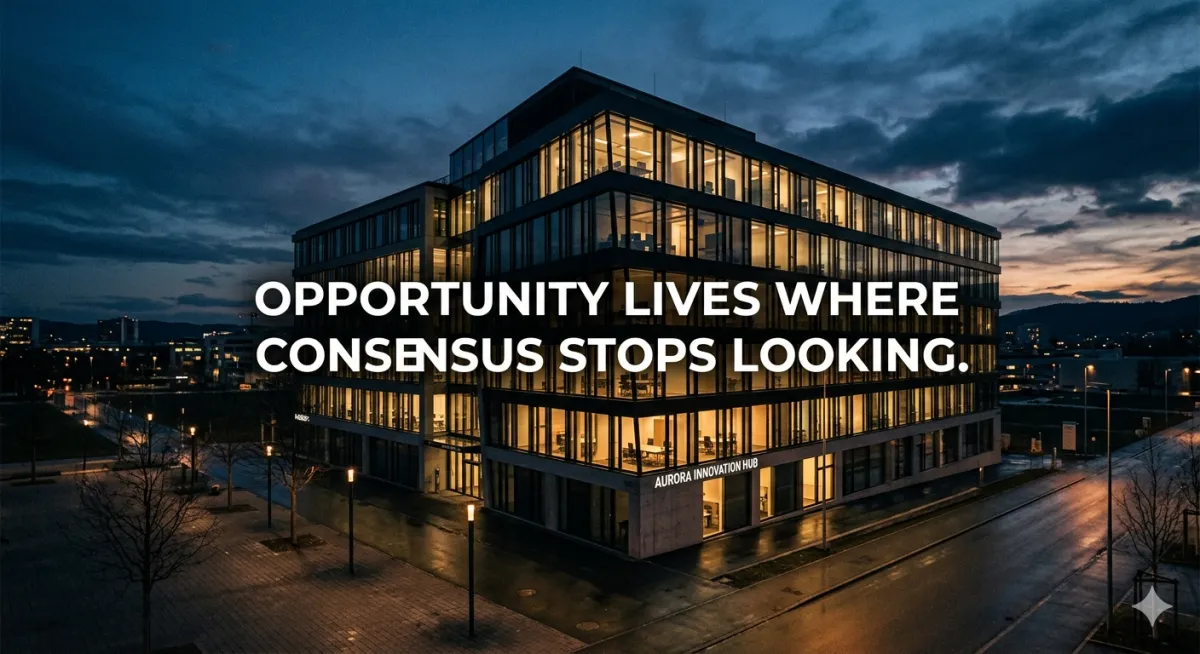
The market is usually most emotional at the exact moment it becomes most inefficient. That's where asymmetric opportunity lives — and it's where patient, disciplined capital consistently finds its best entries.
What the Data Actually Shows
The consensus narrative on commercial real estate in 2026 is dominated by two storylines: the ongoing challenges in office and retail, and the relative strength of multifamily and industrial. Both contain truth. Neither tells the complete story.
What the data shows — and what most investors aren't discussing — is that some of the strongest projected returns heading into 2026 and 2027 are appearing in office and retail. Not uniformly. Not in every market. Not for every operator.
But the blanket narrative that wrote off entire asset classes is getting weaker than the underlying fundamentals in specific markets, specific asset types, and specific situations where the distress was narrative-driven rather than fundamental.
Office repositioning in major markets is creating genuine value creation opportunities. The assets that were overbuilt or poorly configured for the post-pandemic work environment are distressed for real reasons. But the well-located, well-configured assets that experienced narrative-driven cap rate expansion are a different story — and they're being priced as though the story is the same.
Retail tells a similar story. The assets that struggled were already struggling before the narrative accelerated their distress. But neighbourhood retail, grocery-anchored centres, and experience-oriented formats in the right locations are performing with a resilience that surprises the people who stopped looking.
Why Private Credit Is the Key to This Opportunity
Alternative lenders now supply over 24% of US commercial real estate debt — well above historical averages. This structural shift in how CRE gets financed is not a temporary dislocation. It reflects a permanent change in the capital stack available to sophisticated operators.
And it matters for the contrarian opportunity for a specific reason.
The assets that are most mispriced right now are almost always the ones that traditional financing can't touch. The time-sensitive repositioning. The complex transitional deal. The asset that needs a lender who understands the specific situation rather than processing it through a standardised underwriting model.
Private credit in real estate provides exactly that flexibility. The terms are set based on the specific asset, the specific operator, and the specific situation — not on what a committee at a regional bank will approve on a standardised form. And in a market where the opportunity lives in the gap between the narrative and the fundamentals, that flexibility is a genuine competitive advantage.
Structure over sentiment. The operators who understand both the asset and the capital structure are the ones accessing deals that everyone else is looking at from the outside.
The Pattern That Never Changes
Five decades of watching market cycles play out has produced one observation I'd stake more confidence in than almost any other: the narrative is always lagging the reality, and the gap between them is always widest at the point of maximum opportunity.
In 2009, real estate was toxic. The investors who bought in that window built generational wealth. In 2021, real estate was can't-miss. The investors who stretched for yield in that environment are still working through the consequences.
The pattern is not that the contrarian view is always right. It's that the consensus view always overshoots — in both directions — and the investors who understand that consistently find themselves positioned ahead of the narrative shift.
The question worth asking right now isn't whether commercial real estate is dead or alive. The question is whether you're looking where everyone else is — or where the fundamentals actually point.
KEY TAKEAWAY: The commercial real estate contrarian view of 2026 — office and retail showing strongest projected returns, alternative lending at record market share, private credit providing access that traditional financing can't — is the one most investors aren't discussing yet. That gap between narrative and fundamentals is exactly where the opportunity lives. The investors positioned before the narrative shifts are the ones who will define the next cycle.
Joe Cook
Pursue. Engineer. Capture.
