The Presence You’re Spending Without Counting
There is a form of absence that doesn’t show up in any calendar.
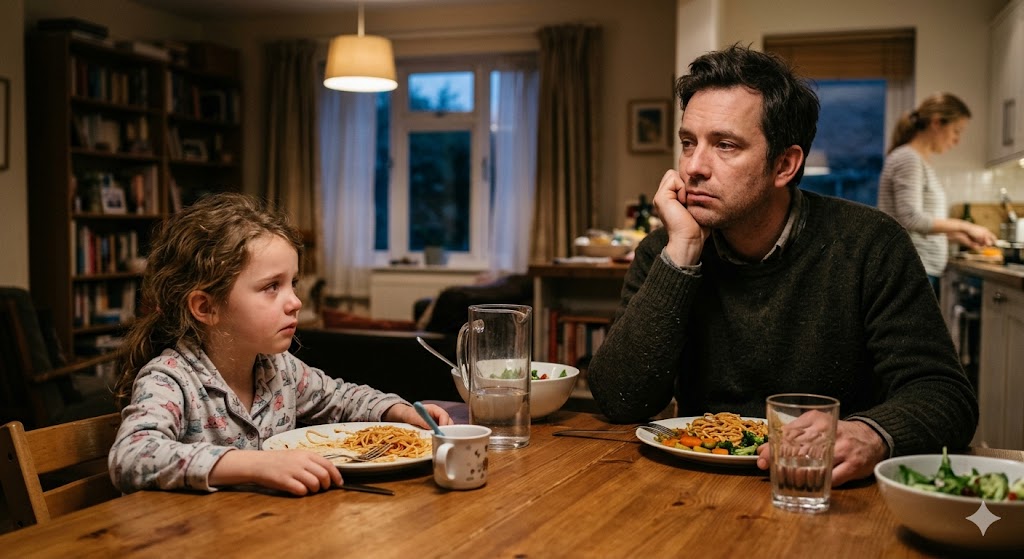
It’s the absence that happens when you’re physically in a room but mentally somewhere else entirely. When your body is at the dinner table and your mind is still in this morning’s deal. When someone you love asks you a direct question and you realise, with a small shock, that you weren’t actually there.
Most high performers know this experience. Very few name it clearly enough to address it.
Because from the outside, it looks like engagement. You’re present. You respond. You nod in the right places. The performance of presence is easy enough to maintain.
It’s the actual presence that requires something most productivity frameworks never ask you to develop.
The people around you are tracking your real attention. Not your physical location. They know the difference. They just stop mentioning it after a while.
What Partial Presence Actually Costs
The cost of chronic partial presence is almost never visible in real time. It accumulates slowly, in the quality of relationships that never quite deepened the way they could have. In children who stopped bringing you the small things because they learned not to interrupt. In partners who stopped sharing the things that mattered because the responses were too distracted to make sharing worthwhile.
By the time these costs become visible — in distance that has become normal, in relationships that have quietly recalibrated around your unavailability — they feel sudden. They weren’t.
The same dynamic plays out in professional relationships. The team member who stops raising problems early because the leader was never quite present enough to hear them without multitasking. The client who stops sharing the real concern because every previous conversation felt like an interruption to something more important. The partner who stops being fully honest because the responses were always half-formed.
Genuine presence is what makes trust possible. Partial presence is what erodes it without anyone being able to name exactly when it happened.
Why High Performers Are Most Vulnerable
The people most at risk of chronic partial absence are the ones with the most to think about.
The mind that is genuinely engaged with complex problems doesn’t switch off because the physical location changed. The deal that was unresolved this morning is still unresolved at the dinner table. The decision that needs to be made is still there during the school run. The mental model that’s half-formed stays active through conversations that deserve full attention..
High performers often experience this as a feature rather than a bug. The always-on thinking feels productive. The connections being made between the conversation at dinner and the problem at work feel valuable.
What they’re missing is the compound cost. Each moment of partial presence trains the people around them to expect partial presence. And each person in their life who has learned to expect partial presence is a relationship that never developed the depth it could have.
The Practice of Arriving
Genuine presence isn’t a personality trait. It’s a practice. And like any practice, it gets better with deliberate attention.
The professionals who develop it almost always share a specific habit: a transition ritual between the work world and the other worlds they inhabit. A deliberate act that marks the shift from one context to another and signals to the mind that the previous context is closed, for now, and the current one deserves full attention.
It doesn’t need to be elaborate. A walk between the office and home. Five minutes of stillness before entering the house. A specific question asked of yourself: what’s actually happening in this room, with these people, right now?
The question is simple. The practice of asking it — genuinely, rather than rhetorically — is what changes the quality of the presence that follows.
The work will still be there. The unresolved decisions will wait.
The moment in front of you is the only one that won’t.
Key Takeaways
1.Partial presence is invisible but not unnoticed — The people around you track your real attention, not your physical location. They adjust to it over time — usually by asking for less, sharing less, and expecting less.
2.The cost accumulates slowly and arrives suddenly — Relationships that never deepened, children who stopped bringing the small things, partners who stopped sharing what mattered — these feel like sudden revelations. They were years in the making.
3.High performers are most vulnerable — The always-on mind that makes someone effective at work is the same thing that makes genuine presence difficult outside it. Recognising this is the first step to managing it.
4.Presence is a practice, not a personality trait — Transition rituals, deliberate context-switching, the specific question of what’s actually happening right now — these develop the capacity for genuine presence over time.
5.The moment in front of you is the only one that won’t wait — The deal, the decision, the problem will still be there. The person asking for your attention may not approach you again in the same way. Presence is the investment with the highest irreversible cost if neglected.
When did you last realise you weren’t as present as the person in front of you deserved — and what changed?
Joe Cook
Pursue. Engineer. Capture.
