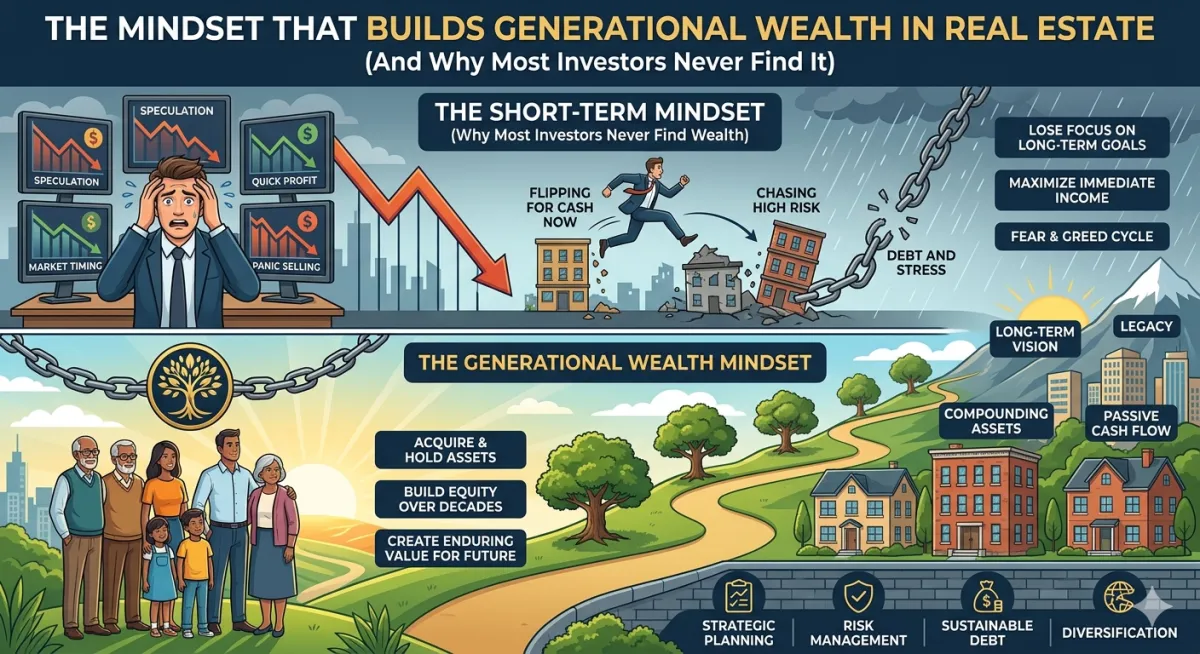
The Mindset That Builds Generational Wealth in Real Estate (And Why Most Investors Never Find It)
I used to come to real estate looking for returns.
The ones who build generational wealth come looking for something different. They come looking for
a philosophy.
The return trap
Early in my career, I was obsessed with returns. IRR. Equity multiples. Cash-on-cash yield. I chased
the highest projected numbers. I competed on spreadsheets. I optimized for the best-case scenario.
Then my first real cycle hit. And I learned the most expensive lesson of my career: optimizing for
returns is the fastest way to destroy capital.
The philosophy shift
The investors I've watched build true generational wealth share a mindset that has nothing to do with
return optimization. It has everything to do with survival optimization.
They ask different questions:
Not 'What's the best this deal can do?' — but 'What's the worst this deal can do, and can we
survive it?'
Not 'How do we maximize the return?' — but 'How do we protect the capital first?'
The three pillars
Pillar 1: Protect first, grow second. Capital preservation isn't a conservative strategy. It's the
foundation of an aggressive long-term strategy. You cannot compound what you've lost.
Pillar 2: Structure is the strategy. The most important investment decision isn't which deal to do.
It's how to structure the deal you do. Debt structure, reserve depth, underwriting assumptions —
these determine whether you survive the cycle.
Pillar 3: Patience is leverage. In private markets, time is your most powerful asset. The investor with
a 20-year horizon holds structural advantages over the investor with a 3-year horizon. Illiquidity, when
properly understood, isn't a constraint — it's a competitive edge.
The real goal
The goal was never the highest return in any single year. The goal was to still be compounding — still
growing, still building — 20 years later.
It requires patience over urgency. Structure over hype. Discipline over excitement. Building
