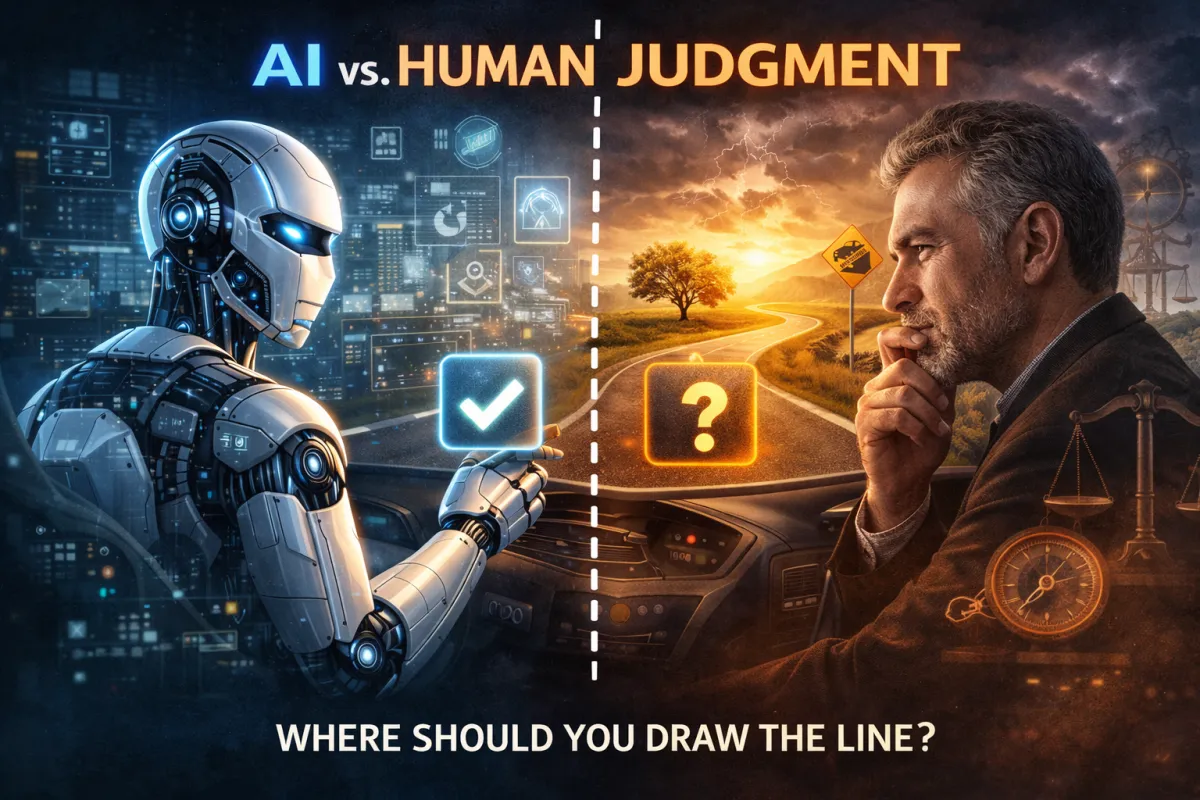
Intelligence vs. wisdom AI and human choices
AI synthesizes. It summarizes. It connects dots across millions of data points in seconds. Impressive? Absolutely. Wise? Not even close.
Tools don't have skin in the game. They don't carry consequences. They don't answer for outcomes. The gap between intelligence and wisdom isn't a technical problem — it's a human one.
What AI genuinely cannot do
Proverbs 9:10 says the fear of the Lord is the beginning of wisdom. Not intelligence. Not information. Wisdom. And wisdom — real wisdom — is relational. It's born out of accountability, consequence, and a moral weight that AI will never carry.
AI has no soul to humble. No God to answer to. No eternity to reckon with. It processes. It predicts. It produces. But it does not fear — and so for all its breathtaking capability, it operates in a wisdom vacuum.
It can tell you the what and the how with stunning precision. But the why that gives knowledge its moral weight? The discernment to know when silence is better than speech, when mercy trumps efficiency, when the truth must be spoken at personal cost? That comes from a source AI will never access.
The real danger isn't the technology
This isn't a warning against AI. Tools are tools. The danger is category confusion — mistaking intelligence for wisdom, mistaking capability for virtue, handing a very powerful calculator the decisions that require conscience.
Use AI for what it does brilliantly: research, synthesis, speed, pattern recognition, drafting, analysis. Let it do the heavy lifting on the tasks that don't require judgment. That's a genuine competitive advantage and I use it every day.
But the decisions that shape your culture, your character, your relationships, and your legacy — those still require a human being who has something at stake. Who will answer for the outcome. Who carries the weight of consequence.
That part is still yours.
Where do you draw the line on what you trust AI to do?
